Cybersecurity is undergoing a major transformation. As organizations adopt cloud computing, remote work models, SaaS platforms, and distributed infrastructure, traditional perimeter-based security is becoming obsolete.
For years, cybersecurity relied on a centralized model — a strong firewall protecting a corporate network. But modern enterprises no longer operate within a single network boundary. Employees access systems from multiple locations, applications run across different cloud platforms, and data moves continuously between services.
This shift has created a need for a new approach: Cybersecurity Mesh Architecture (CSMA).
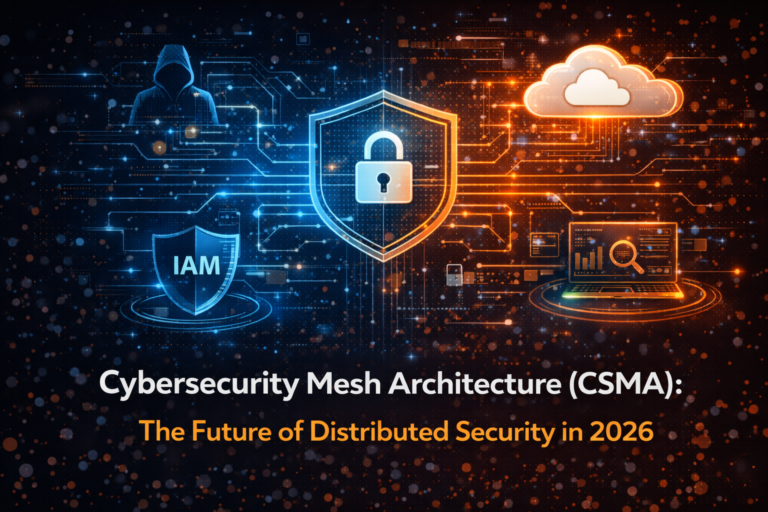
Cybersecurity mesh is a flexible, distributed security framework that allows organizations to extend protection across multiple environments while maintaining centralized visibility and control. By decentralizing security enforcement and integrating security tools, CSMA enables businesses to secure users, devices, applications, and data wherever they exist.
In 2026, cybersecurity mesh is emerging as a critical component of modern enterprise security strategy.
What Is Cybersecurity Mesh Architecture?
Cybersecurity Mesh Architecture (CSMA) is a modular and distributed approach to cybersecurity that enables different security tools and services to work together seamlessly.
Instead of relying on a single security perimeter, CSMA creates interconnected security layers that protect assets across cloud environments, on-premise infrastructure, endpoints, and identities.
In a cybersecurity mesh model:
Security controls are distributed across the environment
Policies are centrally managed
Security tools share intelligence and context
Identity becomes a primary security anchor
The result is a security ecosystem that adapts to modern IT environments rather than forcing infrastructure into outdated security models.
Why Traditional Security Models Are Failing
Traditional cybersecurity architectures were built around the concept of a trusted internal network. Once a user or device passed through the firewall, they often had broad access to internal resources.
This model no longer works due to several factors:
Remote work and hybrid workforce models
Cloud-first application deployment
Increasing reliance on SaaS platforms
Rapid growth of IoT devices
Multi-cloud infrastructure
These changes mean there is no longer a clear network boundary to protect.
Traditional Security vs Cybersecurity Mesh
| Security Model | Characteristics | Limitations |
|---|---|---|
| Perimeter Security | Centralized firewall protection | Ineffective for remote access |
| Network-Centric Security | Focus on internal network | Limited visibility across cloud |
| Cybersecurity Mesh | Distributed security architecture | Requires integration maturity |
Cybersecurity mesh adapts security controls to modern distributed environments.
Core Principles of Cybersecurity Mesh Architecture
CSMA is built on several foundational principles that differentiate it from traditional security frameworks.
Identity-Centric Security
In modern environments, identity has become the primary security boundary. Users authenticate through identity providers and access applications regardless of location.
Cybersecurity mesh integrates identity-based access control across all services and environments.
Interoperability Between Security Tools
Many organizations use dozens of security solutions. CSMA enables these tools to communicate and share threat intelligence.
This integration improves threat detection and reduces security silos.
Distributed Policy Enforcement
Security policies are applied consistently across endpoints, cloud workloads, and network environments.
Instead of relying on a central gateway, security controls operate closer to the resources they protect.
Centralized Security Intelligence
Although enforcement is distributed, security monitoring and analytics remain centralized. This provides unified visibility for security teams.
Key Components of a Cybersecurity Mesh Framework
Implementing CSMA requires several interconnected components:
Identity and Access Management (IAM)
Controls authentication, authorization, and identity verification.Security Information and Event Management (SIEM)
Aggregates logs and analyzes security events across systems.Endpoint Detection and Response (EDR)
Monitors devices for suspicious activity.Cloud Security Platforms
Protect workloads and data across cloud environments.Threat Intelligence Platforms
Provide real-time threat insights and attack indicators.
These components work together to create a cohesive security ecosystem.
Benefits of Cybersecurity Mesh Architecture
Organizations adopting cybersecurity mesh gain several advantages.
Improved Threat Detection
By integrating security tools and sharing intelligence across platforms, CSMA improves the ability to detect complex attacks that span multiple environments.
Greater Scalability
Distributed security models scale more effectively as organizations expand cloud usage and remote workforces.
Enhanced Flexibility
Security policies can adapt to new technologies, infrastructure changes, and emerging threats without requiring major architecture redesigns.
Better User Experience
Identity-centric access models reduce friction for legitimate users while maintaining strong protection.
Cybersecurity Mesh vs Zero Trust
Cybersecurity mesh and Zero Trust are often discussed together, but they serve different roles.
| Security Concept | Purpose | Focus Area |
|---|---|---|
| Zero Trust | Access control philosophy | Verify every request |
| Cybersecurity Mesh | Security architecture | Integrate distributed controls |
Zero Trust defines how access decisions should be made, while cybersecurity mesh defines how security technologies should be structured.
Together, they create a powerful security framework.
Challenges of Implementing Cybersecurity Mesh
Despite its benefits, CSMA adoption presents several challenges.
Integration Complexity
Organizations must integrate multiple security tools and platforms to achieve a fully functional mesh architecture.
Legacy Infrastructure
Older systems may not support modern identity-based security models.
Skill Gaps
Cybersecurity teams require expertise in cloud security, identity management, and threat intelligence to implement CSMA effectively.
Cost Considerations
Deploying new security platforms and integration tools can require significant investment.
However, the long-term benefits often outweigh the initial costs.
Future Trends in Cybersecurity Mesh
Cybersecurity mesh will continue evolving as digital environments grow more complex.
Key trends expected in the coming years include:
AI-driven threat detection systems
Automated security orchestration and response
Integration with edge computing environments
Advanced identity-based security frameworks
Cross-cloud security interoperability
As organizations continue adopting hybrid and multi-cloud architectures, cybersecurity mesh will become an essential security model.
Conclusion
Cybersecurity Mesh Architecture represents a major shift in how organizations approach security. Instead of relying on rigid perimeter defenses, CSMA distributes protection across identities, devices, applications, and cloud environments.
This flexible architecture aligns with modern IT ecosystems where users, workloads, and data operate across multiple platforms and locations.
In 2026 and beyond, organizations that adopt cybersecurity mesh will be better equipped to detect threats, protect distributed systems, and maintain resilience against evolving cyber risks.
Security is no longer about defending a single network boundary.
It’s about protecting an interconnected digital ecosystem.
Please don’t forget to leave a review.